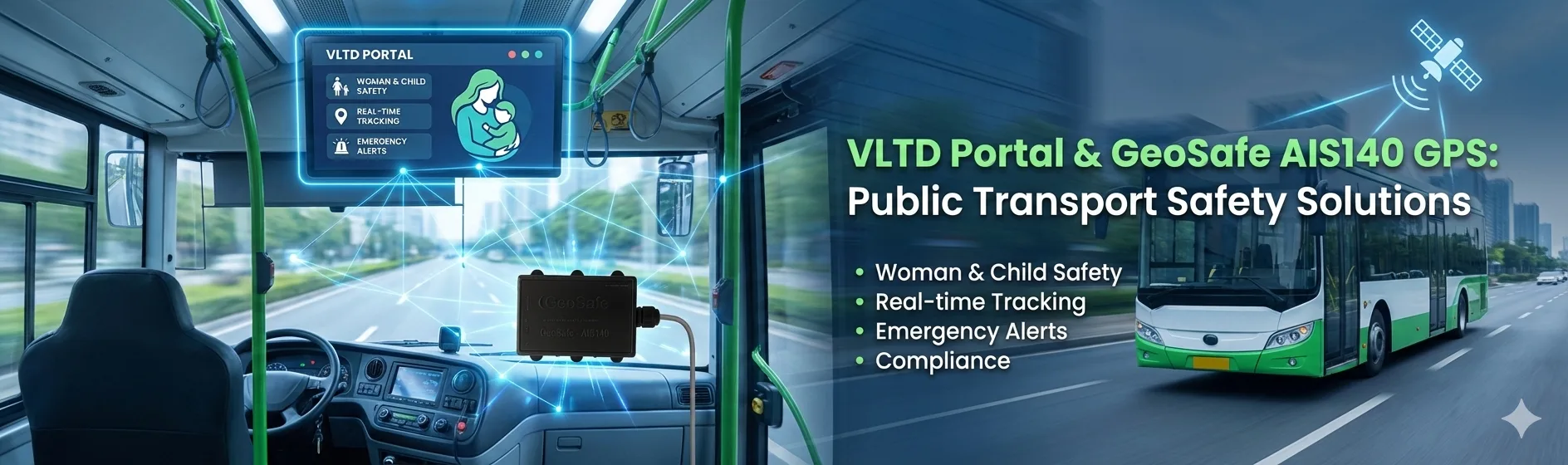
Across India, governments are strengthening public transport safety by implementing VLTD (Vehicle Location Tracking Device) systems and AIS-140 compliance. The core objective is simple: real-time visibility and faster emergency response, especially for women and child safety in buses, school vehicles, taxis, and other public transport categories.
In this blog, you’ll understand:
- What the VLTD portal is
- Why it was developed and how it supports safety
- Why AIS-140 approved devices are mandatory for public transport
- What to check before choosing a VLTD-approved AIS-140 device
- Why GeoSafe is a trusted manufacturer for AIS-140 VTLD deployments
What is a VLTD Portal?
A VLTD portal is an official government platform used to:
- Register AIS-140 compliant VTLD devices
- Map device + vehicle + operator details
- Receive live location and alerts from public transport vehicles
- Enable monitoring by control rooms, enforcement teams, and emergency response systems
In simple terms: a VLTD portal is the centralized monitoring system where approved devices send vehicle data (location, speed, alerts, etc.) to support compliance and safety operations.
What is VLTD (Vehicle Location Tracking Device)?
A VLTD device is a GPS tracking unit installed in a vehicle that can transmit:
- Live vehicle location
- Speed and movement status
- Route history
- Emergency alerts (SOS/panic button)
- Tamper and power-cut alerts (as per deployment requirements)
When a VLTD device is AIS-140 approved, it meets India’s transport standards for hardware, data, and emergency safety features.
Why was the VLTD System Developed? Focus on Women & Child Safety
One of the biggest safety gaps in public transport is delayed response during emergencies. A VLTD portal + AIS-140 device ecosystem helps address this through:
1) Real-time tracking for faster response
If an incident occurs, authorities can see the vehicle’s exact location and route, enabling quicker action.
2) SOS / Panic button support
AIS-140 vehicle tracking typically includes support for panic/SOS buttons, allowing passengers or drivers to trigger emergency alerts.
3) Monitoring & deterrence
Continuous visibility discourages unsafe behavior, unauthorized route deviation, and reckless driving.
4) Improved safety governance
A VLTD portal creates a standardized system where operators and vehicles can be monitored consistently across regions.
This is why governments emphasize VLTD systems for women’s safety, child safety (school transport), and public transport accountability.
Why AIS-140 Approved Devices Are Mandatory in Public Transport
AIS-140 is the Indian standard specifying requirements for Vehicle Tracking Devices and emergency features used in regulated categories.
In many states and transport categories, an AIS-140 approved device is mandatory for:
- Public buses
- School buses/vans
- Taxis and shared mobility
- Government and contract fleets (as per local rules)
The reason is compliance + safety: only approved devices are accepted for integration with the VLTD portal.
What Makes a Device “Approved” for VLTD Portal Use?
When buyers search “VLTD portal approved device”, they usually need a device that supports:
- AIS-140 approval (ICAT/ARAI testing & certification depending on deployment requirement)
- Reliable connectivity (4G with fallback options, where applicable)
- Panic/SOS integration
- Tamper/power-cut detection
- Secure data transmission compatible with portal requirements
- Stable platform + server availability for continuous monitoring
Tip: Approval isn’t only about hardware—successful portal deployment needs consistent data delivery and integration readiness.
GeoSafe: AIS-140 VTLD Approved Device Manufacturer
GeoSafe is a manufacturer of AIS-140 compliant VTLD devices and provides the supporting cloud software for fleet visibility, alerts, and reporting. For system integrators, transport operators, and government-aligned deployments, GeoSafe focuses on:
- AIS-140 compliant hardware manufacturing
- Strong quality practices for field reliability
- Platform readiness for large fleet monitoring
- Support for safety features like SOS/panic button workflows
- Technical assistance during portal onboarding and integration
If your requirement is for a VLTD portal approved device, GeoSafe can help you map the right device configuration and compliance path based on the state/department portal requirements.
How to Choose the Right VLTD Portal Approved Device (Checklist)
Before purchasing, confirm:
- Which portal/state integration is required?
- Vehicle category: bus/taxi/school/contract fleet
- Quantity and rollout timeline
- SOS/panic button wiring and placement requirements
- Connectivity needs (network coverage areas)
- Data reporting frequency and expected uptime
- Installation & maintenance plan (SLA, warranty, AMC)
FAQs (SEO)
Q1. What is the VLTD portal used for?
It’s a government platform that registers vehicles/devices and monitors live location and alerts from AIS-140 compliant VTLD devices.
Q2. What is an approved device for VLTD portal?
An approved device generally means an AIS-140 compliant VTLD device accepted for portal integration as per the state/department requirements.
Q3. Is AIS-140 mandatory for all vehicles?
Typically, AIS-140 is mandatory for public transport and regulated categories, not all private vehicles. Requirements depend on state and vehicle category.
Q4. Why is VLTD important for women and child safety?
Because it enables real-time tracking and SOS alerts, improving emergency response and accountability in public transport and school vehicles.
Q5. Does GeoSafe provide AIS-140 approved devices?
Yes—GeoSafe manufactures AIS-140 compliant VTLD devices and supports deployments with software, dashboards, and integration assistance.