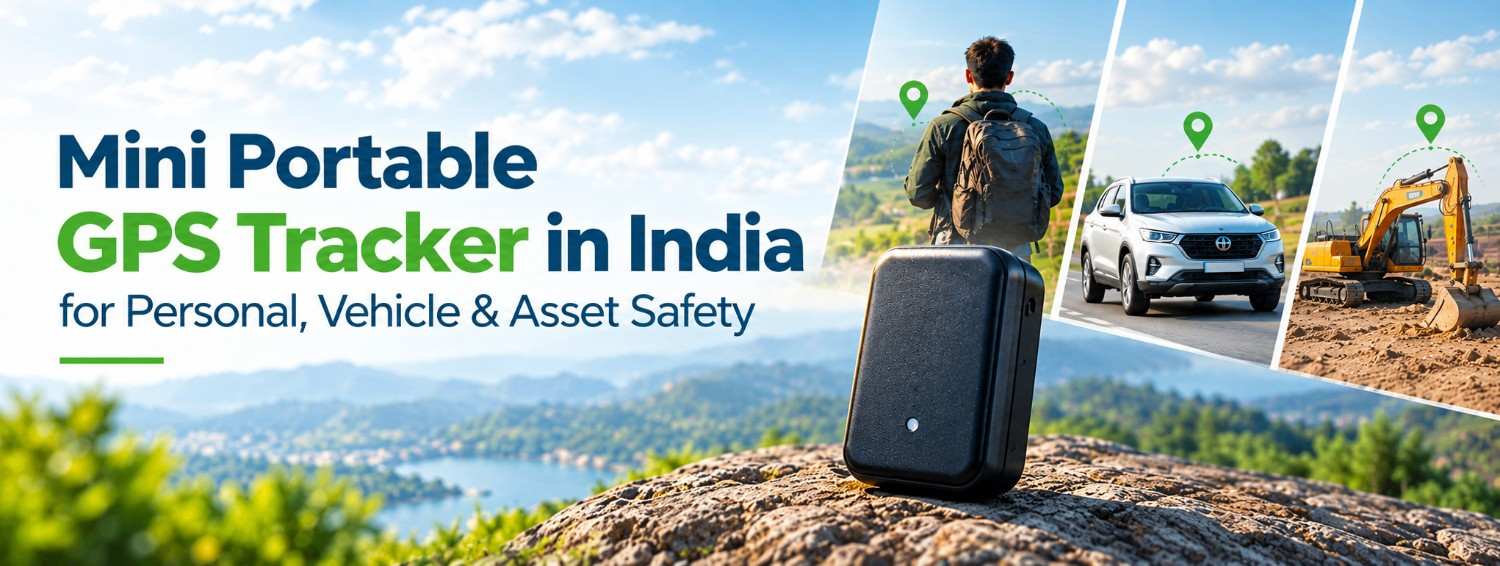
A few years ago, GPS tracking meant expensive fleet software or bulky devices wired into a truck's dashboard. That's changed quite a bit. Today you can slip a tracker smaller than a matchbox into a bag, clip it under a bike seat, or drop it into a courier box and know exactly where it is at any given moment. This is really what's behind the growing search for a mini portable gps tracker in India, whether it's a worried parent, a small fleet owner, or someone shipping expensive equipment across the country.
The appeal isn't complicated. A parent wants to know their child got home safely. A delivery business wants to keep an eye on its bikes without rewiring each one. A traveler doesn't want to lose track of a suitcase full of gear. GeoSafe portable GPS trackers are designed to provide practical tracking and added peace of mind across these situations. This blog walks through what these trackers actually do, why they are becoming increasingly useful across India, and what to check before choosing one.
What Exactly Is a Mini Portable GPS Tracker?
Put simply, it's a small, battery-run gadget that sends its live location over a mobile network. Unlike the wired trackers you'll find bolted into cars or trucks, a portable one isn't tied to anything permanent, it goes wherever it's needed. Toss it in a backpack, tuck it into a purse, strap it to a scooter, or hide it inside a parcel.
Most of these devices lean on a handful of the same core technologies:
- GPS and GLONASS satellite positioning, which gets you an accurate outdoor fix
- 4G/LTE (sometimes 2G) connectivity to push location data to an app or dashboard
- A rechargeable battery that, depending on the model, can run anywhere from a few days to a few weeks
- Geofencing plus SOS alerts, so you're notified the moment something leaves a defined zone, or the moment someone presses a panic button
Put those together and you basically get the same tracking muscle that fleet companies use just shrunk down small enough to fit in your palm.
Why More People in India Are Buying These Right Now
Between crowded cities, a fast-growing gig economy, and the sheer number of two-wheelers on Indian roads, there's no shortage of reasons people want to know where things are. A few trends stand out.
Theft Is Still a Real Problem
Bike and scooter theft hasn't gone away in most Indian cities if anything, it's a headache many owners have simply learned to live with. A hidden battery tracker doesn't stop theft outright, but it does give owners a fighting chance at recovering the vehicle quickly, and without any rewiring or professional install.
Personal Safety Concerns Are Growing
Late-night commuters, students, working professionals, elderly parents living on their own a lot of families now lean on compact trackers with an SOS button built in. One tap, and a designated contact gets an alert along with the exact location. It's a small feature, but it matters when it's actually needed.
Delivery and Logistics Have Exploded
As e-commerce and food delivery push further into tier-2 and tier-3 towns, businesses need a light way to keep tabs on riders, bikes, and parcels without installing hardware into every single vehicle they use.
Data Got Cheap
This one's easy to overlook, but affordable 4G is a big reason this whole category of compact trackers has grown as fast as it has. Real-time tracking used to be something only big fleets could afford; now it's within reach for an individual buying one device for a few thousand rupees.
Where People Actually Use These Trackers
Keeping People Safe
For individual users, this is mostly about peace of mind. Parents track a child's route home. Families check in on an elderly relative who might wander off or need help urgently. Someone traveling solo shares their live location with a friend back home. Nearly every consumer tracker on the market ships with an SOS button that fires off an alert with coordinates to whoever's set up to receive it.
Watching Over a Vehicle
Two-wheeler owners, cab drivers and small operators running a handful of vehicles often go for portable trackers instead of wired ones simply because they're cheaper and easier to move around. No hardwiring means the same device can be shifted from one bike to another, hidden wherever makes sense, and reused even after a vehicle gets sold.
Tracking Assets and Valuables in Transit
Businesses moving expensive goods, companies renting out equipment, or even a traveler carrying pricey camera gear all of them use portable trackers the same basic way, drop it in, set a geofence, and get an alert the second something goes off-route. It's an early warning system more than anything else, but that early warning is often what makes recovery possible.
What to Actually Check Before Buying One
Not every tracker on the market holds up the same way once you're actually using it day to day. A few things worth checking before you spend your money:
- Battery life. A tracker that needs charging every single day gets annoying fast. Look for something that comfortably holds a charge for several days on standby.
- Network support. With 2G networks slowly being phased out in parts of the country, it's worth making sure any portable tracker you're considering runs on 4G otherwise you might be buying yourself a problem down the line.
- How often it updates. A device pinging its location every few seconds is genuinely more useful in an emergency than one that only checks in every few minutes.
- Geofencing. Being able to set a boundary and get pinged the moment it's crossed is arguably the single most useful feature on the whole device.
- SOS and calling. An SOS button that also supports two-way calling adds a real layer of reassurance, especially for older users or kids.
- Build quality. These things get thrown in bags, dropped, and rained on. Water resistance and a sturdy build aren't optional extras they're the difference between a device lasting years versus months.
- The app itself. A messy, confusing app can ruin an otherwise good tracker. Location history, alerts, battery status all of it should be easy to find without digging through five menus.
How GeoSafe Approaches This
GeoSafe builds its portable trackers with the same engineering discipline it puts into its vehicle tracking and fleet systems accurate real-time updates, dependable batteries, and an app that doesn't require a manual to figure out. That consistency matters more than it might seem, a tracker that's flaky or slow to update location is basically useless the one time you actually need it.
If you're weighing your options in the mini portable gps tracker in India space, the thing to prioritize isn't flashy features, it's whether the connection holds up and whether there's real support behind the device if something goes wrong. That's backed by dedicated customer support and an app built for both individual buyers and businesses managing several devices at once.
Is It Actually Worth Buying?
For most people worried about a child's commute, an aging parent living alone, a delivery vehicle, or valuable goods in transit, yes, it usually is. The cost of the device is small next to what you'd lose, financially or otherwise, in an actual emergency where you had no idea where someone or something was. And because it's portable rather than fixed, one device can genuinely serve several purposes over time tracking a bike this month, going into a suitcase the next.
Frequently Asked Questions
What's the difference between a mini portable GPS tracker and one that's wired into a vehicle?
A portable tracker runs on its own battery and can be moved between a person, a vehicle, or an asset. A wired tracker is permanently connected to a vehicle's electrical system and stays put.
How long does the battery actually last?
It depends on the model and how often it's sending location updates, but most consumer trackers last anywhere from a few days to a couple of weeks on standby.
Does it need Wi-Fi to work?
No. These devices run on mobile data (2G or 4G), so they work anywhere there's network coverage Wi-Fi isn't part of the equation.
How accurate is the location data?
Trackers using GPS and GLONASS together typically land within a few meters of accuracy, assuming there's a clear sky view and decent network signal.
Can the same tracker be used for both a vehicle and personal safety?
Yes. Since nothing's hardwired, the same device can move between a bike, a bag, or a shipment depending on what you need tracked at the time.
Final Thoughts
Safety in India is increasingly less about reacting after something's gone wrong and more about having visibility before it does. A mini portable gps tracker in India gives ordinary people visibility for a family member, a vehicle, or a shipment without the hassle of a permanent installation.
As connectivity keeps improving and awareness keeps growing, these small devices are likely to become as normal as a phone case rather than a niche purchase. Companies like GeoSafe are part of that shift, pairing solid hardware with software that's actually easy to use. Explore GeoSafe’s portable GPS tracking solutions today and choose a smarter way to keep people, vehicles and valuable assets within reach.